.svg)
Need Quick Response? Call us 1300 909 339

Many people travel to Australia fearing religious persecution in their home countries. This concern is widespread, as religious persecution remains a global issue. If you are facing religious persecution, Australia offers a legal pathway to protection through its visa framework. Thus, for people who are at risk of harm due to their faith and who seek safety and the ability to live without fear of persecution, the Protection Visa is an available option.
At Protection Visa Australia, we help people understand the meaning of religious persecution in the context of protection visas, the types of issues faced by different groups, and how you can qualify for refuge. Read on to gain invaluable insights to strengthen your appeal and support your application for a Protection Visa in Australia.
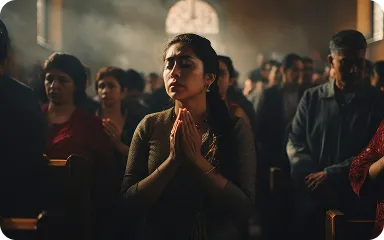
Persecution based on religious beliefs can vary widely across countries. Something that is not an issue in one country can be a huge problem in another. Therefore, understanding different types of religious persecution is essential to identifying whether you are a valid candidate for a Protection Visa in Australia. This may include:
When a country has blasphemy laws, individuals who speak out against or defy religious norms are punished severely. Generally, these laws suppress minority religious groups. The government, as well as people belonging to the major religions, oppress and express hate towards people who express dissent or practise a different faith from theirs.
Forced conversion is another form of religious persecution, in which people are threatened, manipulated, or pressured to abandon their faith and adopt another. This type of oppression is especially prevalent in countries where minorities are under extreme pressure from those of the majority faith.
Some nations are notorious for their systematic oppression of religious minorities. Religious persecution in these nations takes the form of violence, legal discrimination, forced conversions, or restrictions on religious expression. Below is a broad list of high-risk countries where individuals face severe risks due to their religion.
The burden of proof is always on the applicant when applying for a protection visa. They have to show that they have been or will be persecuted in their home country for their religious beliefs. If you are applying for such a visa, the following types of evidence can help support your claim and establish your credibility.
Religious Group Membership
If you belong to a religious group that is persecuted in your home country, you will need to prove it.You can provide news reports showing that you and people of your religion face discrimination, violence and other types of mistreatment. If you can prove that your religious group is a known minority and that you have been personally targeted because of it, you can help make your case stronger.
Attacks on Places of Worship
Photographs, videos, news reports, police reports and other forms of proof that clearly show that your places of worship have been attacked are critical. They can be churches, mosques, temples, etc.
You can present supporting documentation showing you have been a victim of violence at a religious gathering. Personal testimony from credible witnesses that corroborates your claims of being arrested or attacked during worship or while attending religious ceremonies can help, among other proof.

Australia has a long history of providing refuge to those who have faced religious persecution and violence. If you are seeking asylum in Australia, you may be eligible to apply for a Protection Visa. However, like any other visa application process, this one also has its complexities. You have to be organized, thorough, and truthful.
At Protection Visa Australia, we specialize in guiding individuals through the application process and helping them understand their eligibility. Our experienced migration agents will assist you by understanding your circumstances, gathering important documents and providing advice specific to your case.